




How to Avoid Lower Productivity….
It’s 4:55 p.m., and you’re wrapping up your workday. As you mentally review the day, you realize you didn’t accomplish a single key task you had planned. Yet, you feel drained. Frustrated, you think, “What did I even do today? Why does this keep happening?”
Sound familiar?
This end-of-day productivity let-down is all too common. You work non-stop yet feel like you’ve made no real progress. Often, the response is to double down—working longer hours, feeling more stressed, and eventually burning out. Or, we shift into blame mode, pointing fingers at:
Stuff: “There’s just too much to do.”
Time: “I don’t have enough hours in the day.”
Others: “If my boss or team didn’t pile so much on me…”
But here’s the hard truth: none of these is the real issue. The problem isn’t the tasks, the time, or other people—it’s how you manage it all. It’s not about doing more; it’s about managing better. And that starts with changing your habits.
To reclaim your time, feel productive, and leave work with a sense of accomplishment, here are four things to stop doing and four things to start doing today.
Transition 1: Stop Checking Email First
Checking your email first thing in the morning is a productivity trap. When you start your day by opening your inbox, you allow incoming requests to dictate your priorities. Every new email feels urgent, derailing the plans you made.
Start with Your Calendar and To-Do List
Spend 2–3 minutes reviewing your calendar and to-do list before opening your inbox. These tools reflect what you’ve already decided is important. Prioritizing your planned commitments before diving into emails helps you stay focused on meaningful work. Once you’ve grounded yourself in your plans, then you can process new requests more strategically.
Transition 2: Stop Planning to Do Everything
Setting yourself up to complete 10 key tasks in a single day is unrealistic. Between meetings, emails, and daily responsibilities, overloading your to-do list guarantees frustration and failure.
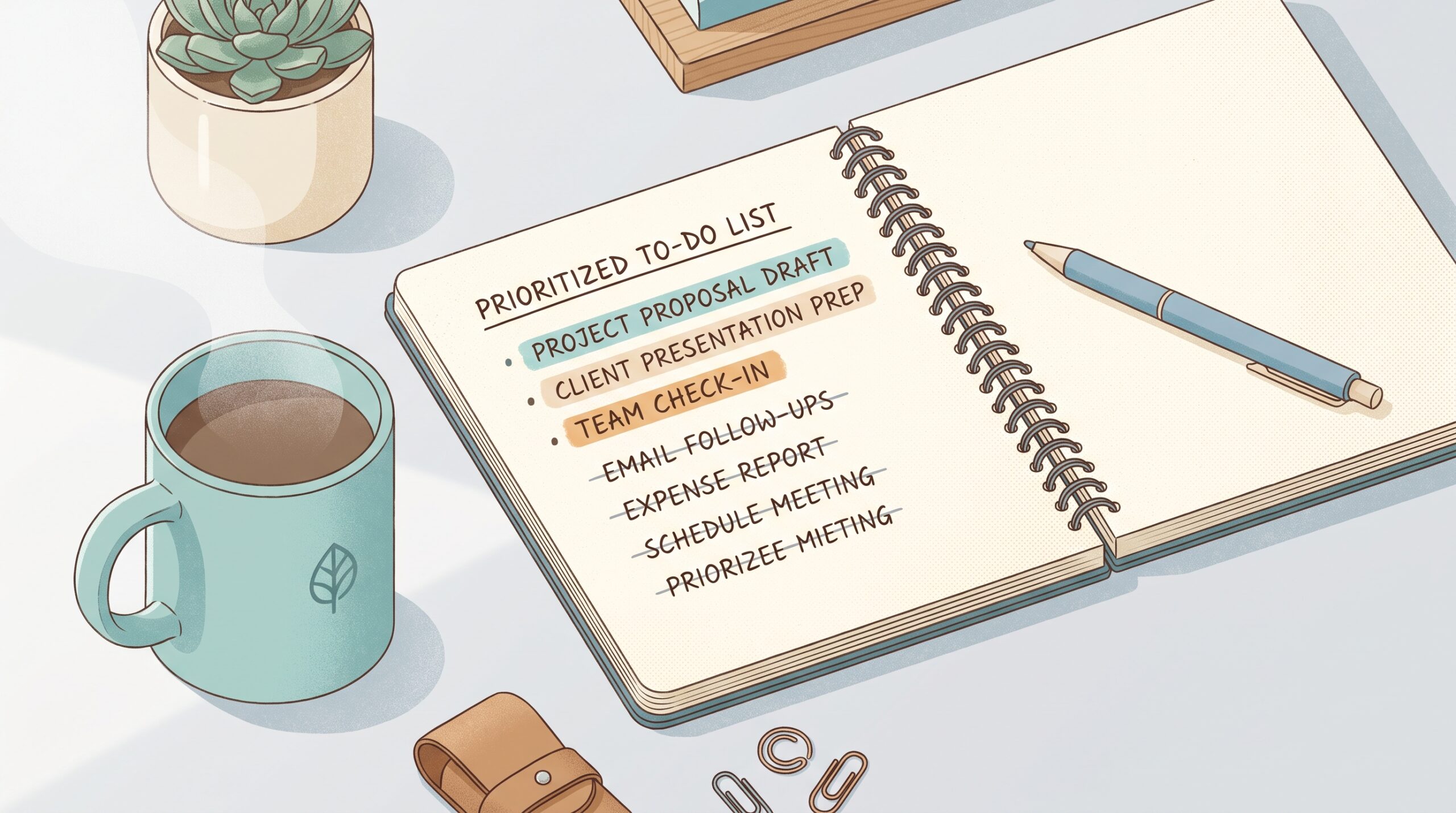
Start Focusing on Three Key Tasks
Identify three essential tasks to accomplish each day—work that will move important projects forward. By limiting your focus, you’ll set yourself up for success and avoid overcommitment. Once you complete those three tasks, you can take on additional work if time allows.
Transition 3: Stop Saying Yes to Everything
The illusion of saying “yes” to every request is a surefire way to overload your plate. Agreeing to do everything doesn’t create more time—it just creates more stress.
Start Saying No or Renegotiating Requests
When faced with new requests, pause and assess. Ask clarifying questions to understand what’s really required. Then, be willing to decline or adjust the commitment. For example:
“I’d love to help, but I need to focus on other priorities. Could we revisit this next month?”
“I can’t meet that deadline, but I could start next week and deliver it by Tuesday. Does that work?”
These responses show professionalism and protect your bandwidth.
Transition 4: Stop Multitasking Email and Work
Email is a major productivity killer when managed poorly. Switching between reading emails and doing the tasks they prompt wastes time and breaks focus. Processing emails and completing projects are distinct activities—and combining them reduces efficiency.
Start Scheduling “Email-Only” Time
Dedicate specific blocks of time each day to process email. During this time, focus solely on reading and organizing emails:
Decide the next action for each email.
Add tasks to your calendar or to-do list.
Archive emails once processed.
When you separate email management from project work, you’ll be more productive in both.
Reclaim Your Day
Life isn’t slowing down anytime soon, but you can take back control of your time, attention, and energy. At the end of your day, you deserve to feel both exhausted and productive—not overwhelmed and unaccomplished.
Follow these transitions to develop habits that support stress-free productivity:
Check your calendar and to-do list before email.
Focus on three key tasks per day.
Say no or renegotiate when necessary.
Process email during dedicated times.
Best wishes,
Yogesh