




Dear Yogesh,
How can I change my behavior when it feels like an addiction? I want to avoid distractions, but I can’t help myself from checking my phone or other digital devices. Can the GTD (Getting Things Done) skills help me with this?
Signed,
Dinesh
Dear Dinesh,
Thank you for your thoughtful question. You’ve asked how to change behavior and whether GTD skills can help, and my answer is a definitive “Yes!”—but only if the skills become part of your daily habits.
The Real Question: How Do I Make GTD Skills Habits?
A habit is something you do automatically, whether physically or mentally, that starts as a conscious choice. Over time, it becomes ingrained in your behavior. The key question isn’t just whether GTD can help, but how you can make its practices into habits.
How Habits Form: The Habit Loop
To understand how habits form, let’s look at something called the Habit Loop, which helps explain how behaviors get ingrained. It consists of three parts:
- Cue: A trigger that initiates the habit. This could be a place, time of day, person, or object.
- Routine: The behavior you perform after the cue. This is the habit itself.
- Reward: The emotional payoff that reinforces the routine.
As this loop repeats, the habit becomes automatic, and the brain conserves energy by relying on these patterns. To form a new habit, it’s important to focus on both the cue and the reward, not just the routine.
The Golden Rule of Habit Change
The golden rule of habit change is simple: You can’t break a bad habit, you can only replace it. Too often, we try to stop bad behaviors, but quitting something isn’t itself a behavior. Instead, we need to replace the bad behavior with something more constructive.
So, when it comes to digital distractions, you need to replace the routine (checking your phone) with a new, more productive routine.
How GTD Can Help
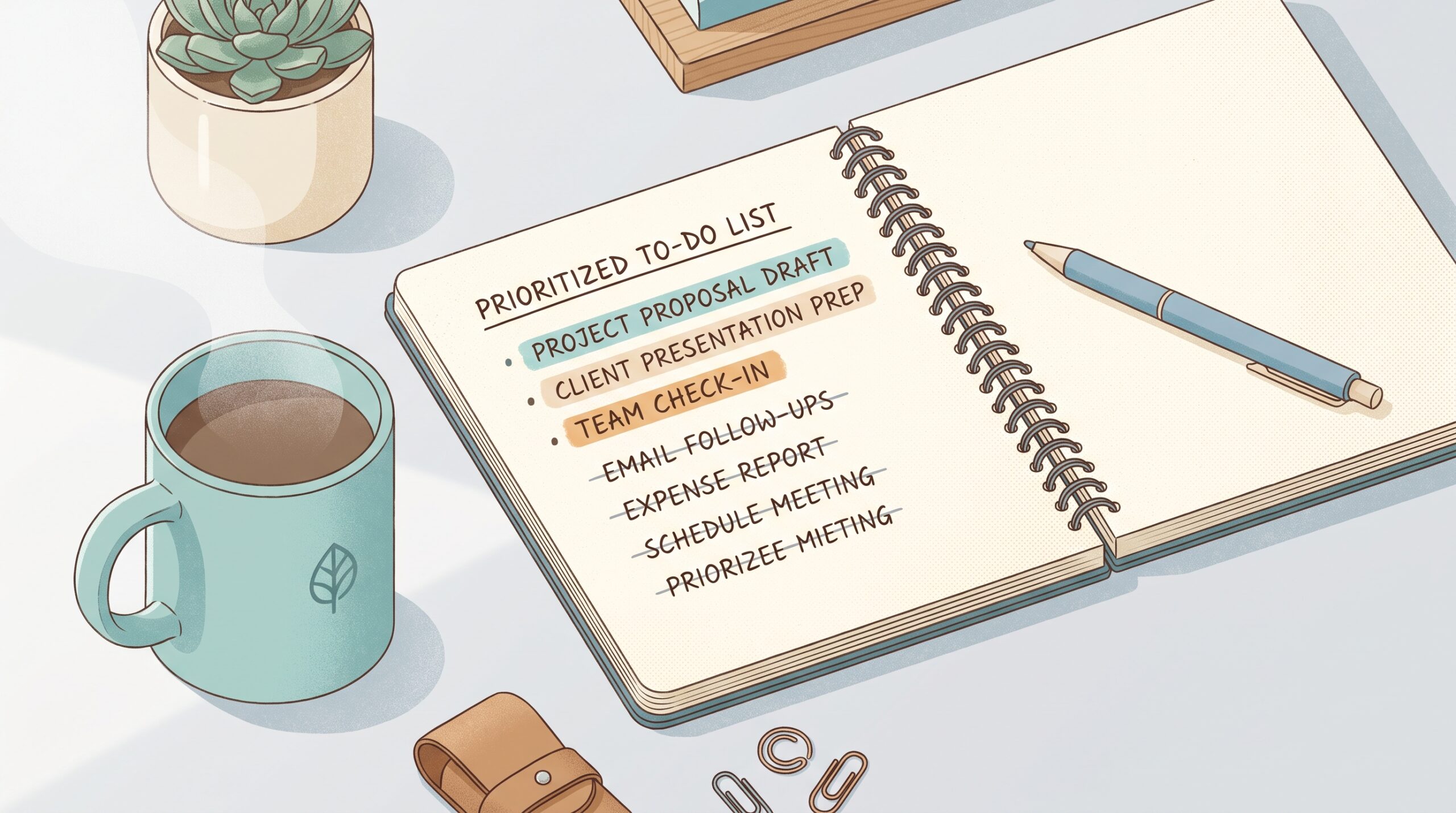
Modern technology makes it easy to fall into the trap of responding to whatever is the loudest or most urgent, often leading to busyness but not productivity. One of the most effective strategies for GTD practitioners is to check your calendar and to-do list first thing in the morning—before you check emails or notifications. Why? If you start your day with emails, you’re reacting to what’s latest and loudest, which may derail your priorities. But when you start by looking at your goals for the day, you set the tone for a more focused and intentional day.
Now, let’s break it down with the habit loop.
The Habit Loop with Digital Distractions
- Cue: You wake up and see your phone or hear notifications.
- Routine: You immediately grab your phone and check emails, texts, or social media.
- Reward: The emotional payoff. You might think there’s no real reward, but there is. It could be a sense of control, social connection, or the stimulation of responding to something urgent.
If the reward is a sense of control, you might feel in charge by staying on top of incoming emails or messages. However, this sense of control is often illusory, as you’re letting others dictate your priorities instead of focusing on what’s most important for your own goals.
Replacing the Routine
To break the cycle, use the same cue (waking up and seeing your phone) but replace the routine. Instead of diving into email, try checking your calendar or to-do list first.
- Cue: You wake up and see your phone.
- Routine: You check your calendar or to-do list instead of emails.
- Reward: A sense of control, but now you’re controlling your day based on your priorities, not the loudest notifications.
A Final Thought on Habit Change
Changing habits takes time and persistence. As Charles Duhigg writes in The Power of Habit: “Change might not be fast, and it isn’t always easy. But with time and effort, almost any habit can be reshaped.”
And, as he says, “If you believe you can change—if you make it a habit—the change becomes real.”
I hope these ideas help. I’d love to hear how others have used habits and GTD to improve their productivity. Feel free to share your experience in the comments.
Best regards,
Yogesh